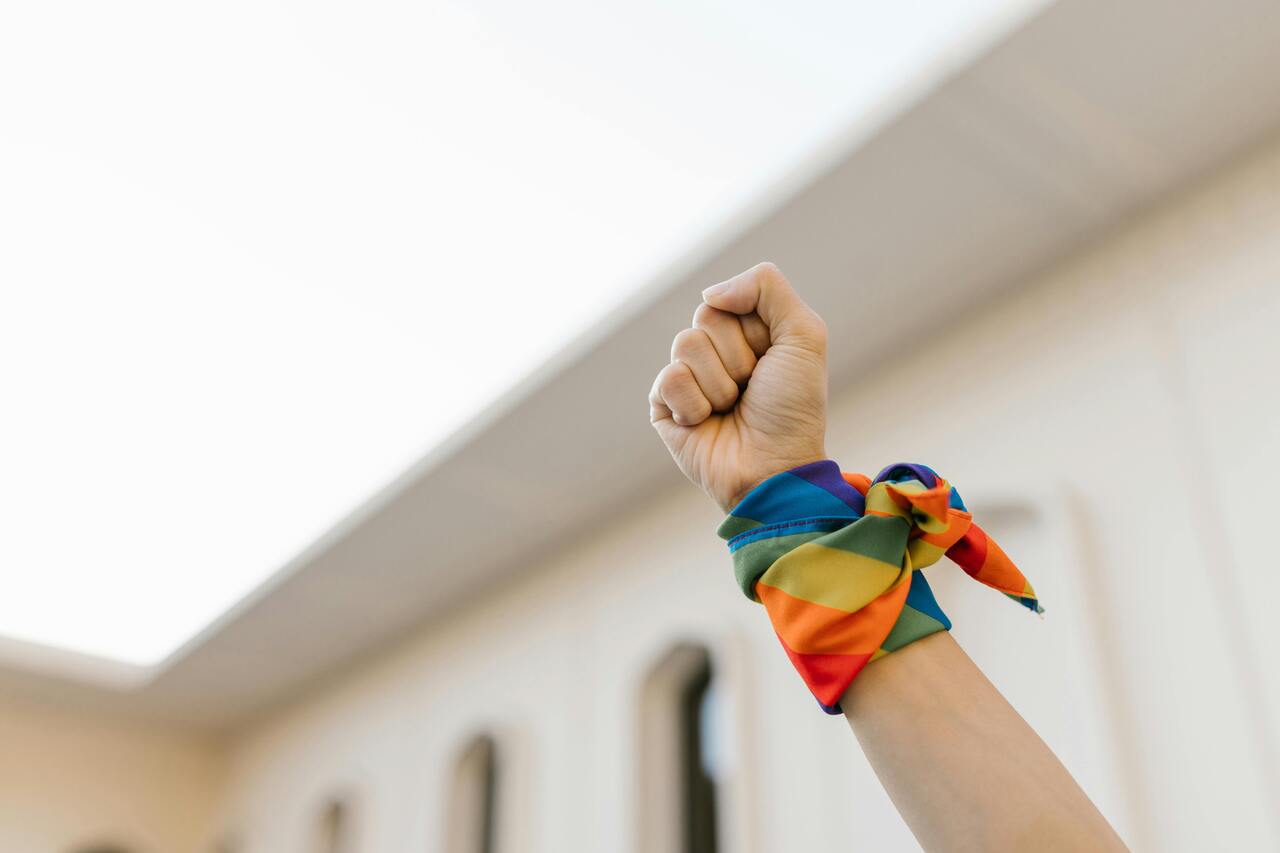
June is the month to be loud and proud. From parades to campaigns, Pride is here to remind us how far the LGBTQIA+ community has come. But it’s important to remember that Pride wasn’t always a party; it started as a protest.
So yes, while it's fantastic to see businesses and leaders celebrating Pride every June, it’s important to mention that allyship isn’t a seasonal campaign; it’s a year-round commitment. If we’re not fighting the systems that create inequality for the other 11 months of the year, then we’re not really showing up. Here’s our guide to better understanding and supporting queer employees at work and in life.
The History of the LGBTQIA+ Movement
To truly support the queer community, it’s important to understand the history of their movement. It began with a brick (literally). In the early hours of June 28, 1969, police raided the Stonewall Inn, a gay bar in New York City. Raids like this were routine because same-sex dancing, cross-dressing, or simply existing as a queer person in public could get you arrested.
But this time, the community pushed back. Led by trans women like Marsha P. Johnson and Sylvia Rivera, alongside drag queens, gay men, and lesbians, patrons of the bar fought back against police brutality and what followed were six nights of demonstrations and resistance. This was a spontaneous uprising that marked the beginning of organised LGBTQIA+ activism.
The significance of this moment comes from it being the first time in documented history that queer people physically resisted abuse and discrimination, and rioted. The following year, the first Pride marches were held in New York, Los Angeles, and Chicago to commemorate this event.
Understanding the Acronym: LGBTQIA+
You’ve probably seen the acronym LGBTQIA+ before and maybe even stumbled a bit trying to remember what all the letters stand for. That’s okay! The community has grown over time to be more inclusive, and so has the language we use to describe it. Each letter represents a unique identity under the broad queer umbrella. Here’s a simple breakdown of what each letter means:
Lesbian: A woman who is attracted to other women.
Gay: Typically refers to a man who is attracted to men, but can also be used broadly.
Bisexual: Someone who is attracted to both men and women.
Transgender: A person whose gender identity differs from the sex they were assigned at birth.
Queer: Once used as a slur, this word has been reclaimed. It’s used by those who don’t align with traditional labels or who feel connected to multiple parts of the community.
Intersex: People born with a mix of male and female biological traits (like chromosomes, hormones, or anatomy). Being intersex is about biology, not gender identity.
Asexual: A person who experiences little or no sexual attraction to others. This doesn’t mean they can’t form deep romantic or emotional bonds.
Two-Spirited: A term used by some Indigenous North American cultures to describe a person who embodies both masculine and feminine spirits. In North America, the acronym LGBTQIA+ is commonly known as 2SLGBTQIA+ to highlight indigenous communities and their challenges.
And then there’s the plus: Which stands for all other identities not specifically listed. If you don’t feel like you fit into any of the above but know you belong, there’s a place for you here.
Pro tip: It’s perfectly acceptable to refer to the LGBTQIA+ community as the “queer community” or the “rainbow community”. If someone prefers a different name for it, they will kindly let you know.
The L Comes First in the Alphabet Soup
Women have always been an integral part of the queer community even though gay men are still more predominantly featured. All through the 1900s, lesbians would accompany gay men to clubs and pretend to be couples; sometimes even entering what is today known as a “lavender marriage”. But in the 80s and 90s, lesbians became the real heroes of the community.
In the height of the HIV/AIDS epidemic, gay men were abandoned — by families, by the government, and by a failing healthcare system. Many hospitals refused to treat them. Funeral homes declined their bodies. In other words, society turned its back, but lesbians didn’t.
They organised food deliveries. They opened their homes. They became caregivers, nurses, and activists. In many cases, they cared for complete strangers simply because no one else would. Their efforts saved lives and provided dignity in death for many. The L comes first as a nod to these women and their compassion, their leadership, and their refusal to look away.
Transgender and Non-Binary Identities Explained
Gender identity refers to how someone sees themselves. For some people, that doesn’t fit neatly into the categories of “male” or “female.” Some people identify as one gender, some as both, and others as neither. This is where terms like transgender and non-binary come in. These identities exist on a spectrum and can look different for everyone. Let’s break this down in plain English:
Transgender refers to your gender identity. How you see and experience yourself. If someone is assigned female at birth but identifies as male, they’re a trans man. If they are assigned male at birth but identifies as female, they’re a trans woman.
Non-binary people don’t exclusively identify as male or female. They may feel like both, neither, or somewhere in between.
It’s important to understand that gender identity doesn’t correlate to your attraction patterns. Someone could be assigned female at birth, transition to male, but experience male attraction. They are a gay man who is also trans.
And yes, it’s polite to use they/them pronouns for anyone. It’s grammatically correct and we’ve used it forever when gender is unknown (e.g. “Someone left their phone, I hope they know it’s here.”). Lastly – and certainly not least – using the pronouns someone asks for is also a basic sign of respect.
How to Be a Real Ally (Not Just in June)
Pride is about visibility, joy, grief, resilience, and the ongoing fight for equity for everybody. It’s a celebration of those who came before us and a promise to those who come next. If you're a workplace leader wondering how to support your LGBTQIA+ colleagues: show up! Show up when it’s hard. Show up when it’s quiet. Show up when it’s not June.
Five practical ways to support queer individuals – both at work and in life:
Celebrate Out Loud: Take your team to Pride events, donate to local LGBTQIA+ groups, or host an internal lunch-and-learn. Show that your support isn’t just performative.
Include Pronouns: Add pronouns to your email signature or Zoom name. It normalises the practice and makes trans and non-binary colleagues feel safer.
Open the Door: Create a culture where LGBTQIA+ employees feel welcome to bring their full selves to work. That starts with inclusive policies and leadership that listens.
Stay Curious: Read books. Follow queer voices on social media. Attend workshops. Don’t expect your LGBTQIA+ colleagues to educate you, do the work yourself.
Speak Up: If you hear a homophobic joke or see someone being excluded, say something. Silence protects the status quo, and the status quo still harms queer people.
Note from the author: I almost never include personal notes like this in my work, but Pride is a very special topic for me. As a gay man (and an extremely fabulous one, at that) I can say firsthand how deeply understanding the history of my community has helped me find my place in the world. While Pride is a celebration of sexual diversity, I’ve always seen it as an anti-oppression culture.
The same systems that oppress queer people are used to oppress women, men, people of colour, indigenous communities, and anyone considered “non-conforming.”
Embracing Pride means choosing to resist sexism, transphobia, patriarchy, racism, discrimination, and all other forms of violence against another human. My existence is resistance, and I am proud of it.